Welcome to Yongyi Fasteners, Your Reliable Fastener Supply Partner!

-
ProductsWe supply flat washers, spring washers, drop-in anchors, anchor bolts, hex nuts, hex bolts, sleeve anchors, threaded rods and OEM fastener products to DIN, BS, ANSI and MS standards.

-
About usHEBEI YONGYI FASTENERS MANUFACTURING CO.,LTD is located in China's largest fasteners production base Yongnian fasteners centre.
-
NewsHebei Yongyi Fasteners shares company updates, product knowledge and fastener industry news for global buyers.
-
ServiceThe products sold throughout the domestic and exported to Southeast Asia and Europe and other countries and regions. Our products win good reputation with domestic and foreign customers.



YONGYI FASTENERS
Support stable quality from material selection, processing and inspection to final delivery.
FOCUS ON HOT SPOTS


Your guide to picking perfect wheel bolts
Published:
2026-05-15
Author:
YONGYI FASTENERS
Choose the right wheel bolts for your car by matching size, seat type, and material to factory specs for safe, secure, and long-lasting wheel fitment.
You want your car to be safe and work well, so it is important to use wheel bolts that match your car’s factory specs. Wheel bolts do not last forever. You should check them often and change them when needed to keep your wheels tight. If you use the wrong size or seat type, your wheels can get loose or break. When you get new wheels, make sure they fit and are the right kind. Pick strong materials and put the bolts on the right way to stay safe.
Always check your wheel bolts when you do car maintenance.
Ask a mechanic to look at your bolts during checkups.
Checking and changing bolts often helps your car stay safe.
Car Wheel Bolt Specs
Getting the right wheel bolts for your car starts with knowing your factory specs. If you match these specs, you keep your wheels safe and your ride smooth. Let’s break down how you can find these details and what each term means for your car.
Finding Factory Specifications
You have a few ways to track down the exact specs for your lug bolts and nuts. Here’s how you can do it:
Owner’s Manual
Start with your owner’s manual. You’ll usually find a section about wheels and tires. This section lists the bolt pattern, thread size, and sometimes the seat type. If you can’t find it there, check for a sticker inside the driver’s door jamb. This sticker often shows the lug pattern and other important details.
Manufacturer Website
If you lost your manual, don’t worry. Go to your car manufacturer’s website. Most brands have a support or FAQ section where you can search for your car’s model and year. You’ll find the specs you need, including the number of lugs, bolt diameter, and thread pitch.
Dealership Inquiry
Still unsure? Call or visit your local dealership. The service department can look up your car’s wheel bolt specs using your VIN. They can also answer questions about seat type or special requirements for your model.
Tip: Always double-check the specs if you plan to use aftermarket wheels or adapters. Even a small difference in size or seat type can cause problems.
Here’s a quick checklist to help you confirm your specs:
Check the owner’s manual for the hub bolt pattern.
Look for a sticker inside the driver’s door jamb for specifications.
Measure the hub directly if necessary.
Confirm the seat type matches the wheel’s mounting hole.
Make sure the bolt pattern lug count matches the hub exactly.
Verify the bolt circle diameter is exact, not approximate.
If you use an adapter, check its load rating and thickness impact on offset.
Understanding Bolt Terms
You’ll see a lot of terms when you shop for lug bolts or nuts. Let’s make them simple:
Size
Size means more than just length. It covers the diameter of the bolt, the thread size, and the length. For example, a common size for sedans is 12mm x 1.5 x 28mm. The first number is the diameter, the second is the thread pitch, and the third is the length.
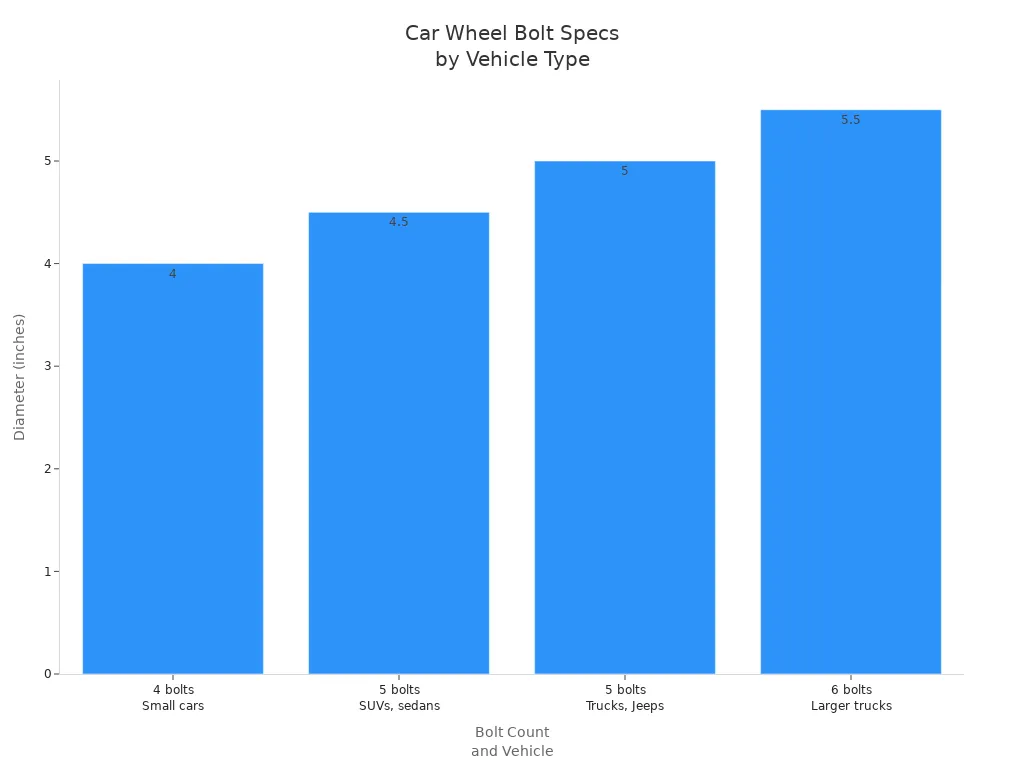
| Number of Bolts | Diameter (inches) | Common Vehicles |
|---|---|---|
| 4 | 4 | Small cars |
| 5 | 4.5 | SUVs, sedans |
| 5 | 5 | Trucks, Jeeps |
| 6 | 5.5 | Larger trucks |
Thread Pitch
Thread pitch is the distance between threads on the bolt. You need to match the thread pitch exactly. If you use the wrong thread, the lug bolts or nuts won’t tighten right. Most cars use metric threads, like 1.25mm or 1.5mm. Trucks often use larger, coarser threads.
Seat Type
The seat type is the shape where the lug nut or bolt touches the wheel. You must confirm the seat type before you buy. The most common types are:
Conical seat: This is a tapered shape and fits most U.S. and Japanese cars.
Ball seat: This is round and common on European cars.
If you use the wrong seat type, the wheel won’t sit flat. That can cause vibration or even damage.
Length
Length matters for safety. If the bolt or nut is too short, it won’t hold the wheel tight. If it’s too long, it can hit parts behind the hub. Always measure the length from the base of the seat to the end of the bolt.
Here’s a table to help you with key terms:
| Key Term | Description |
|---|---|
| Bolt Pattern | The arrangement of lug holes in a wheel, shown as two numbers: the count of bolt holes and the diameter of the circle they form. |
| Lug Seat Type | The shape of the contact area between the lug nut and the wheel’s mounting hole, which must match for proper fit. |
| Hub Center Size | The diameter of the hole in the wheel that fits over the hub, crucial for centering the wheel correctly. |
| Offset | The distance from the wheel’s hub mounting surface to the centerline of the wheel, affecting the wheel’s position. |
| Width | The measurement of the wheel from one bead seat to the other, influencing tire placement and clearance. |
Note: The U.S. Department of Transportation and SAE International set standards for wheel bolt specs. Always follow these standards to keep your car safe and legal.
Why Factory Specs Matter
When you choose the size of the lug nuts or bolts, you protect your wheels and your safety. Using the wrong size or thread can strip the hub or cause the wheel to come loose. Always match your car’s factory specs for the best fit and performance. If you ever feel unsure, ask a professional to check your lug bolts before you hit the road.
Measuring and Checking Fitment
Getting the right fit for your wheel bolts is key to keeping your wheels safe and secure. If you want to avoid problems like loose wheels or damaged threads, you need to measure your bolts and check fitment before you buy new lug nuts or bolts.
Measuring Wheel Bolts
Tools Needed
You do not need a lot of fancy gear, but using the right tools makes the job easier and more accurate. Here are some tools that automotive pros trust:
A digital caliper for measuring bolt diameter and length.
A thread pitch gauge to check the thread.
A torque wrench for proper tightening. Many mechanics prefer a click-type or digital torque wrench for accuracy.
A ruler or tape measure for quick checks.
A click torque wrench gives you reliable results with about ±4% accuracy. Digital torque wrenches can be even more precise, sometimes down to ±2%. These tools help you avoid over-tightening or under-tightening your lug bolts and nuts.
Step-by-Step Process
Remove one lug bolt or nut from your wheel.
Use the caliper to measure the diameter of the bolt shaft.
Measure the length from the base of the seat to the end of the bolt.
Use the thread pitch gauge to find the correct thread.
Check the seat type by looking at the shape where the bolt or nut touches the wheel.
Write down all your measurements and compare them to your car’s factory specs.
If you plan to use aftermarket wheels, always double-check the fitment. Even a small difference in size or seat type can cause problems.
Avoiding Fitment Mistakes
Common Errors
Many drivers make the same mistakes when picking new lug bolts or nuts, especially with aftermarket wheels. Here is a table of common errors and what they mean for your car:
| Mistake | Description |
|---|---|
| Wrong center bore | Aftermarket wheels may not match your hub, so you need hub-centric rings. |
| Incorrect offsets | High offsets can hit brakes or suspension. Low offsets may stick out too far. |
| Cheap wheel quality | Budget wheels may crack under stress. |
| Ignoring brake clearance | Some wheels do not fit over big brake calipers. |
| Extreme tire stretch | Narrow tires on wide wheels can cause bead failure. |
Always check the fitment before you buy. A small mistake can lead to big problems on the road.
Seat Type Compatibility
Matching the seat type is just as important as getting the right size or thread. Here is what you need to know:
Mismatched seat types can cause uneven clamping and make your wheels loose.
Conical seats work for most U.S. and Japanese cars. Ball seats are common on European cars.
Using the wrong seat type can lead to wheel vibration, damage, or even the wheel coming off.
The most common mistake is mixing ball seat bolts with cone seat wheels or the other way around.
Always match the seat type of your lug bolts or nuts to your wheels for safety.
If you ever feel unsure, ask a professional to check your fitment. Taking a few extra minutes now can save you from headaches later.
Wheel Bolt Material and Finish
Choosing the right material for your wheel bolts makes a big difference in how your wheels perform and last. You might wonder if you should pick steel or alloy. Let’s break down what you need to know.
Steel vs. Alloy
Durability
Steel bolts have a reputation for strength. Experts say steel handles high stress and repeated tightening without losing shape. To ensure they can handle high stress and extreme environments, many high-performance fasteners are manufactured to meet ASTM A193 standards, which specify the mechanical properties required for heavy-duty bolting materials. If you drive in tough conditions or carry heavy loads, steel gives you peace of mind. Alloy bolts, often made from aluminum or a mix of metals, weigh less. This can help if you want to reduce your car’s weight for better speed or fuel economy. However, alloys can be softer. They may not last as long if you change your wheels often or use power tools.
Pros and Cons
Here’s a quick visual to help you compare:
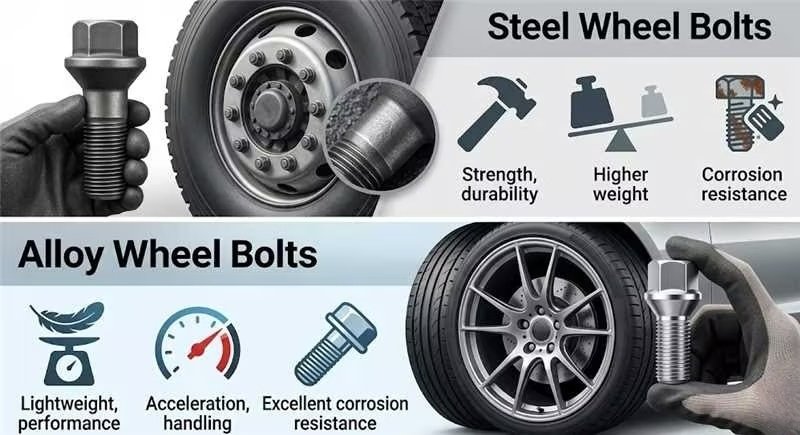
| Feature | Steel Bolts | Alloy Bolts |
|---|---|---|
| Strength | Very high | Moderate to high |
| Weight | Heavier | Lighter |
| Cost | Usually lower | Can be higher |
| Corrosion Risk | Needs coating | Needs coating |
| Best For | Daily driving, heavy loads | Racing, show cars |
If you use mag seat lug nuts, you’ll notice that steel versions last longer under repeated use. Alloy mag seat lug nuts look great but may need more frequent checks for wear.
Corrosion Resistance
Coatings
Corrosion can ruin even the best lug bolts. You want to keep rust away, especially if you live where roads get salted or it rains a lot. Different coatings offer different levels of protection:
| Coating Type | Effectiveness in Corrosion Prevention |
|---|---|
| Zinc plating | Basic corrosion protection |
| Hot-dip galvanizing | Excellent outdoor resistance |
| Black oxide | Minimal protection, mainly aesthetic |
| Advanced coatings | Suitable for chemical or marine environments |
If you want your mag seat lug nuts to last, pick a coating that matches your climate. Hot-dip galvanizing works well for wet or snowy places. Zinc plating is fine for dry areas or show cars.
Longevity
Corrosion resistance matters a lot for how long your lug bolts last. In humid or salty places, untreated bolts can rust fast. This weakens the bolt and makes it hard to remove. In dry climates, you still need to watch for dust and abrasion, which can wear down coatings over time. Experts recommend checking your lug bolts every season, especially if you see any rust or flaking.
Tip: Always clean the threads before installing new bolts. Dirt and rust can affect torque and make your wheels unsafe.
If you want the best mix of looks and strength, steel mag seat lug nuts with a quality coating give you long life and solid performance. Alloy mag seat lug nuts work for show cars or racing, but you’ll need to check them more often.
Wheel Bolt Safety
You want your wheels to stay tight and your ride to feel smooth. Safety starts with picking certified bolts and checking them often. Let’s look at what makes a bolt safe and how you can spot trouble before it happens.
Certified and Branded Bolts
Certification Standards
You should always choose bolts and lug nuts that meet strict certification standards. The Society of Automotive Engineers (SAE) and the U.S. Department of Transportation (DOT) set rules for strength, material, and proper thread engagement. These standards help you avoid weak bolts that can snap or strip. When you see a certification mark, you know the bolt passed tests for secure fastening and durability.
Tip: If you use mag seat or conical lug nuts, check for SAE or DOT markings. These marks mean the nuts and bolts have been tested for proper thread engagement and fit.
Trusted Brands
You might feel tempted to buy cheap, unbranded bolts online. That can lead to trouble. Trusted brands follow certification rules and use quality materials. Experts say that branded bolts last longer and give you better engagement with your wheels. You get peace of mind knowing your lug nut thread engagement meets safety standards.
“I once bought cheap lug nuts for my car. They looked fine, but after a few months, I noticed rust and loose wheels. I switched to certified bolts and mag seat nuts. Now, I check them every season and feel much safer.”
— Alex, daily driver
Inspecting and Replacing Bolts
Signs of Wear
You need to inspect your wheel bolts and lug nuts often. Look for these signs:
Rust or corrosion on the threads or seat.
Stripped or damaged threads.
Rounded or worn mag seat surfaces.
Loose engagement after tightening.
Cracks or chips in the bolt or nut.
If you see any of these, you should start replacing old lug nuts and bolts right away. Damaged bolts can fail without warning.
| Sign of Wear | What It Means | What To Do |
|---|---|---|
| Rust | Weakens bolt, unsafe | Replace immediately |
| Stripped thread | Poor engagement, loose wheel | Replace and check fitment |
| Worn mag seat | Bad contact, vibration | Replace with correct seat |
| Loose engagement | Wheel may fall off | Inspect and retorque |
| Cracks | Bolt can snap | Replace all affected |
Replacement Frequency
You should not wait for bolts to break before you act. Experts recommend checking your lug nuts and bolts every oil change. If you drive in harsh weather or swap wheels often, check even more. Replace bolts and nuts every few years, or sooner if you see signs of wear. Always make sure you get proper thread engagement when installing new bolts.
Safety matters most. If you ever feel unsure about your bolts, ask a mechanic to check them. You can avoid big problems by replacing old lug nuts and bolts before they fail.
You keep your wheels safe by using certified bolts, checking for wear, and making sure you get secure fastening every time. You protect yourself and your passengers with regular inspections and proper thread engagement.
Buying Wheel Bolts
When you need a new set of lug nuts or bolts, you want to buy from a place you can trust. Picking the right source helps you avoid low-quality parts and keeps your wheels safe. Let’s look at where you can shop and what you should know before you buy.
Trusted Sources
You have a few good options for buying wheel bolts. Each one has its own benefits. Here’s a quick look at what you can expect:
| Feature | Auto Parts Stores | Online Retailers | Dealerships |
|---|---|---|---|
| Experience | Staff with hands-on knowledge | Many have 27+ years in business | Factory-trained experts |
| Quality Control | In-store inspection possible | Multi-point inspection before shipping | OEM parts, strict standards |
| Customization | Limited, but some special orders | Custom sizes and adapters | Usually only factory specs |
| Shipping | Immediate pickup | Fast & free USA shipping | May need to order, local pickup |
| Warranty | Store or manufacturer warranty | Lifetime warranty on many items | Factory warranty |
Auto Parts Stores
You can visit a local auto parts store for quick help. Staff can answer questions and show you the bolts in person. You get to check the parts before you buy. If you need something special, some stores can order it for you.
Online Retailers
Shopping online gives you lots of choices. Many online stores have years of experience and offer custom sizes. They inspect every item before shipping and often provide fast, free shipping. You can find a lifetime warranty on many products. Just make sure you buy from a trusted site with good reviews.
Dealerships
Dealerships sell bolts that match your car’s factory specs. You get peace of mind knowing the parts fit your vehicle. Staff can look up your car’s details and order the right parts if they don’t have them in stock. This is a good choice if you want original equipment.
Tip: Always ask about the warranty and return policy before you buy. This helps if you need to exchange the bolts or nuts later.
Info Needed for Purchase
Before you buy, gather all the details about your car and wheels. This helps you avoid mistakes and saves time.
Vehicle Details
Write down your car’s make, model, year, and trim. This info helps the store or website find the right parts for you. If you have aftermarket wheels, note the brand and size.
Bolt Specs
Check these things before you buy:
Confirm bolt pattern compatibility.
Check hub center size.
Review offset range carefully.
Match width and diameter.
Confirm brake clearance.
Verify load support level.
Don’t just look at the bolt pattern. You need to review all fitment details as a set. If you skip a step, you might end up with bolts that don’t fit or need extra parts. Careful checking helps you avoid returns, delays, or unsafe wheels.
If you ever feel unsure, bring an old lug to the store or take a clear photo. Staff can use this to match the right part for you.
Buying the right bolts keeps your wheels secure and your ride smooth. Take your time, check your info, and choose a trusted source.
Installing Wheel Bolts
Getting your wheel bolts installed right keeps your wheels safe and your ride smooth. You want to avoid mistakes that can lead to loose wheels or costly repairs. Let’s walk through the basics so you feel confident every time you work on your car.
Proper Torque
Torque Wrench Use
You need a torque wrench to tighten wheel bolts correctly. This tool helps you apply the exact force your car needs. If you use your hands or a regular wrench, you might over-tighten or under-tighten the bolts. That can cause damage or make your wheels unsafe. A click-type torque wrench works well for most jobs. You hear a click when you reach the right torque, so you know when to stop.
Tip: Always clean the threads before you install new bolts. Dirt or rust can change how much force you need and make your wheels unsafe.
Manufacturer Settings
Every car has its own torque settings. You must follow these numbers to keep your wheels secure. Most cars use a torque range between 80 and 200 Nm. The exact number depends on your vehicle size and wheel type. Here’s a quick table to help you:
| Job | Torque Range | Notes |
|---|---|---|
| Lug Nuts | 80–200 Nm | Varies by vehicle size and wheel type |
If you ignore these settings, you risk damaging the bolts or the hub. Over-tightening can stretch the bolts and make them weak. Under-tightening can let the wheels come loose. Both mistakes can lead to recalls and expensive repairs. Check out this table to see how improper torque affects safety:
| Issue | Impact |
|---|---|
| Average recall cost | ~$10 million |
| Maximum recall cost | Up to $100 million |
| Preventable costs | Up to 60% |
| Industry affected | Automotive accounts for majority |
| Consequence of errors | Major defects and recalls |
You save money and avoid trouble by using the right torque every time.
Professional Help
When to Seek Assistance
Sometimes you need a pro to help with wheel bolt installation. If you feel unsure about torque settings or notice damage on your bolts, ask a mechanic. You should also get help if you use aftermarket wheels or adapters. Pros have the tools and experience to spot problems before they become serious.
Benefits
Professional installation helps avoid common mistakes that can compromise safety and performance, such as improper torque application and misalignment. These errors can lead to significant issues over time, making professional services a worthwhile investment.
You get peace of mind when you let a pro handle your wheel bolts. They check for wear, clean the mounting surface, and use the right torque. You avoid costly recalls and keep your wheels safe.
Here’s a simple checklist for safe installation:
Safety Precautions: Use the correct tools and techniques to prevent accidents.
Inspection: Check wheel studs for wear or damage.
Removal Techniques: Remove old studs without harming the hub.
Installation Methods: Clean the surface, apply anti-seize, and torque bolts to the right value.
You can install wheel bolts yourself, but getting help from a pro makes sure everything is done right. Your wheels stay tight, your ride stays smooth, and you stay safe.
You now know how to pick and install the right wheel bolts for your car. Always check your fitment, use quality materials, and follow each step for a secure fit. Remember to inspect your wheel bolts often and replace them if you see any wear. Double-check compatibility, especially with aftermarket wheels, to keep your ride smooth. If you ever feel unsure, ask a professional for help. Your safety comes first!
FAQ
How often should you check your wheel bolts?
You should check your wheel bolts every time you rotate your tires or change a wheel. If you drive in rough conditions or swap wheels often, inspect them more frequently.
Can you reuse old wheel bolts?
You can reuse wheel bolts if they show no signs of wear, rust, or damage. If you see any cracks or stripped threads, replace them right away.
What happens if you use the wrong seat type?
If you use the wrong seat type, your wheel may not sit flat. This can cause vibration, damage, or even make the wheel come loose while driving.
Do you need a torque wrench for wheel bolts?
Yes, you need a torque wrench. It helps you tighten bolts to the correct setting. This keeps your wheels secure and prevents damage from over-tightening or under-tightening.
Are aftermarket wheel bolts safe?
Aftermarket bolts can be safe if they match your car’s specs and meet safety standards. Always check for proper fitment and certification before you install them.
How do you know if a wheel bolt is too long or too short?
If a bolt is too long, it may hit parts behind the hub. If it’s too short, it won’t hold the wheel tight. Always measure and compare to your car’s factory specs.
Can you mix steel and alloy wheel bolts?
You should not mix steel and alloy bolts. Different materials can cause uneven clamping and may lead to wheel or bolt failure. Stick with one type for all wheels.
What should you do if a wheel bolt feels loose after tightening?
Stop driving and check the bolt right away. Remove it, inspect for damage, and retighten with a torque wrench. If it still feels loose, replace the bolt and check the hub.
Get Quote
Welcome To Know Our Products
Get Product and Service Information
Follow us
We provide OEM service and focus on stable quality, competitive pricing and responsive export support.


Contact Info
Add:Dongmingyang Industrial Park, Mingguan Town, Yongnian District, Handan City, Hebei Province China
Export salesman:
WhatsApp:+86 18830064300
E-mail: sales@hgtfix.com
Export salesman:
WhatsApp
+86 18830064300
E-mail:
Copyright © 2022 HEBEI YONGYI FASTENERS MANUFACTURING CO.,LTD Power by 300.cn | SEO